research, preparation and planning
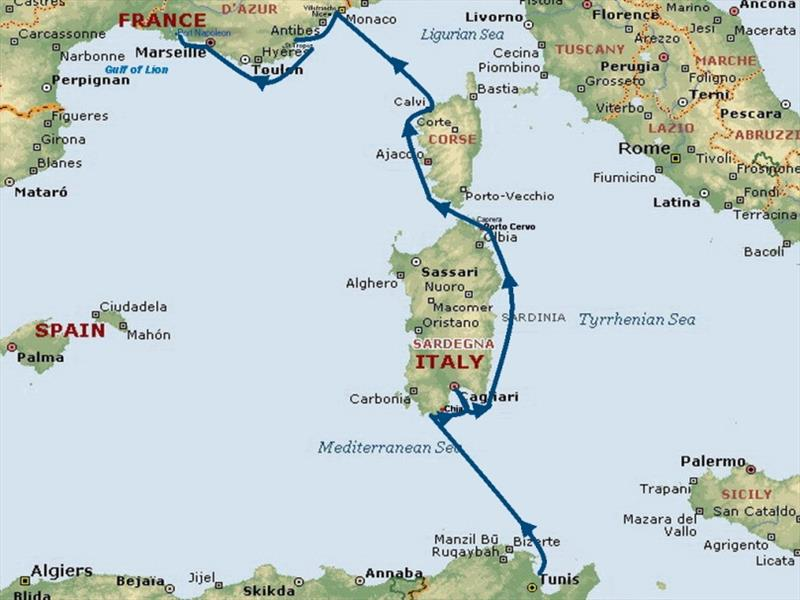
Navigation charts to follow
Ideally we would actually take the route down the west of Sardinia.
For the research page from the Suakin Archipelago please follow this link
The boat
SISKA is a Bianca 27, a Danish built and designed sailboat, 27 feet long (eight meters).
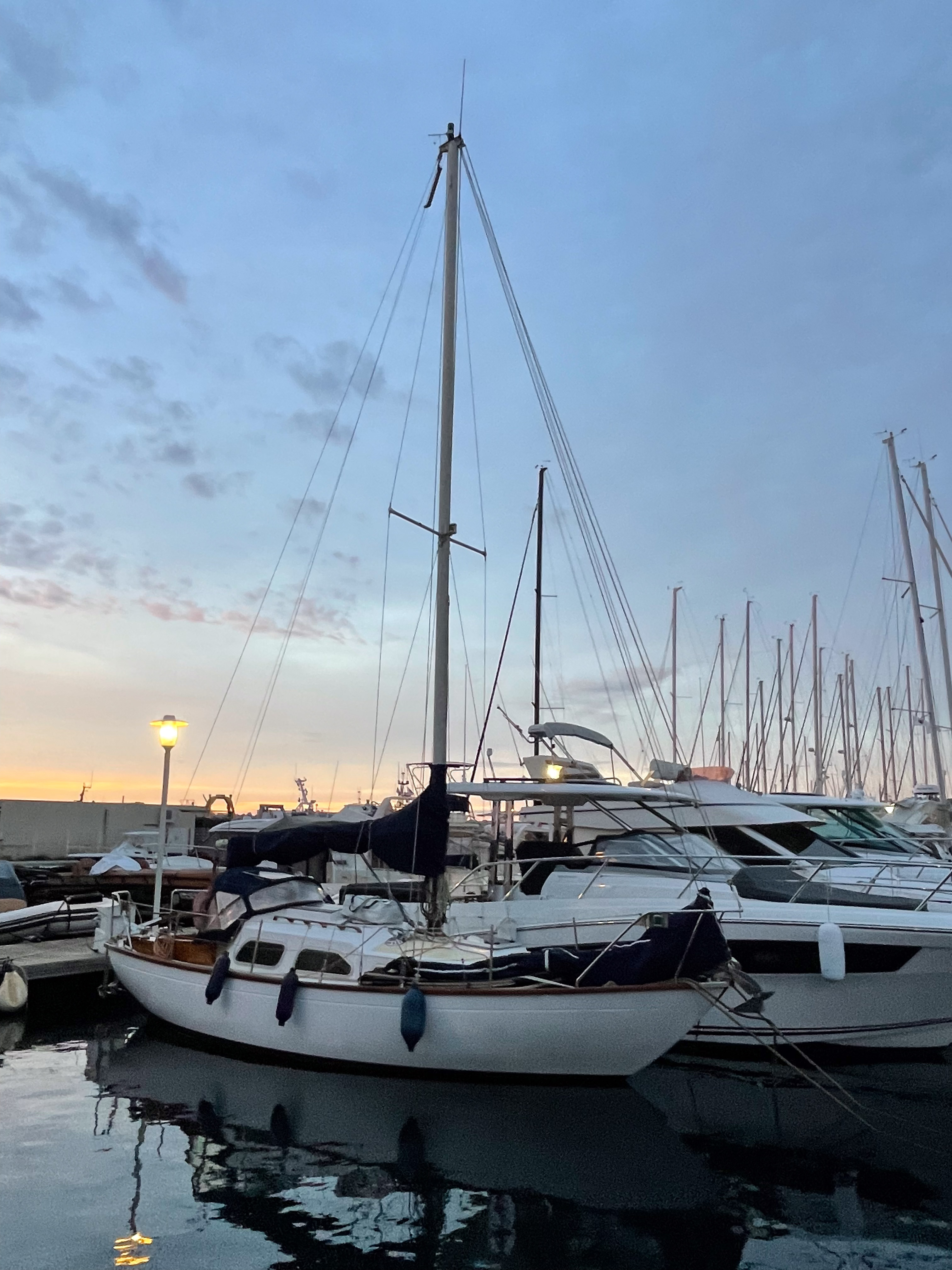
The team!! Zako and Hiba
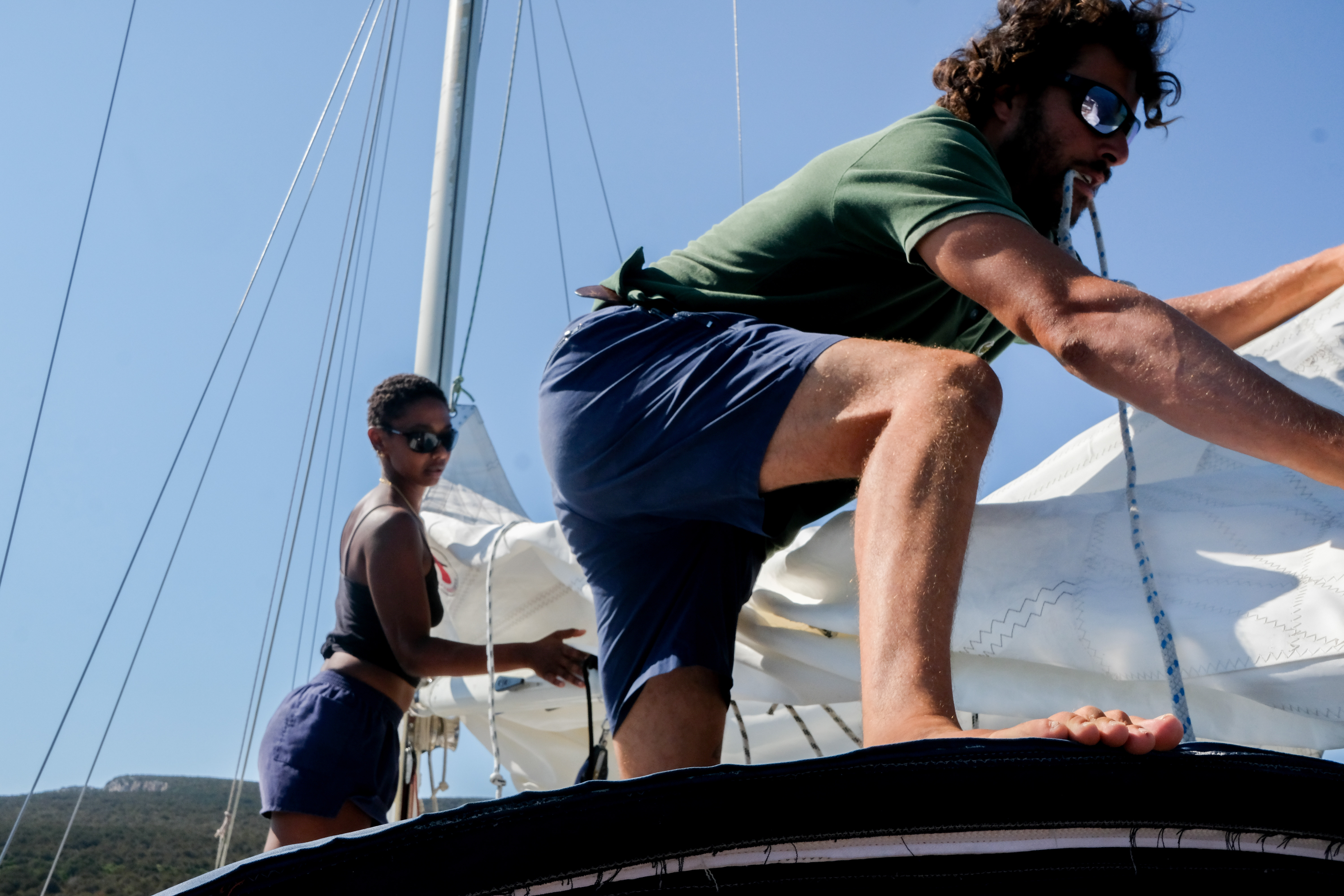
Work had started long before but April to August 2025 was when we started official reparations of the osmosis that had occured on the hull.
Boat osmosis is an often concealed structural issue affecting polyester
fiberglass hulls. This chemical process creates damaging blisters that compromise laminate integrity. Intervention prevents minor issues from escalating into complex, grave issues with the vessel.
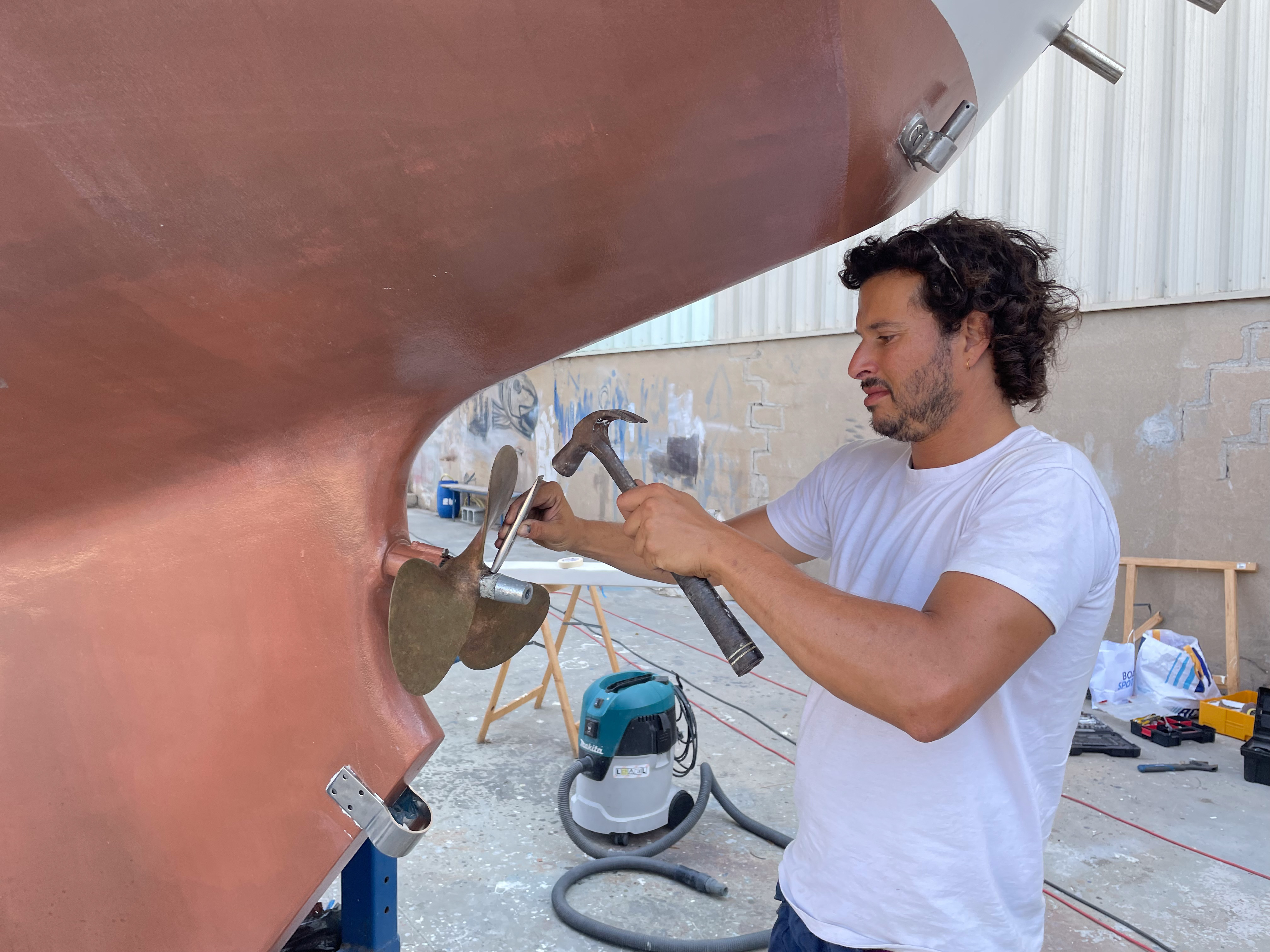
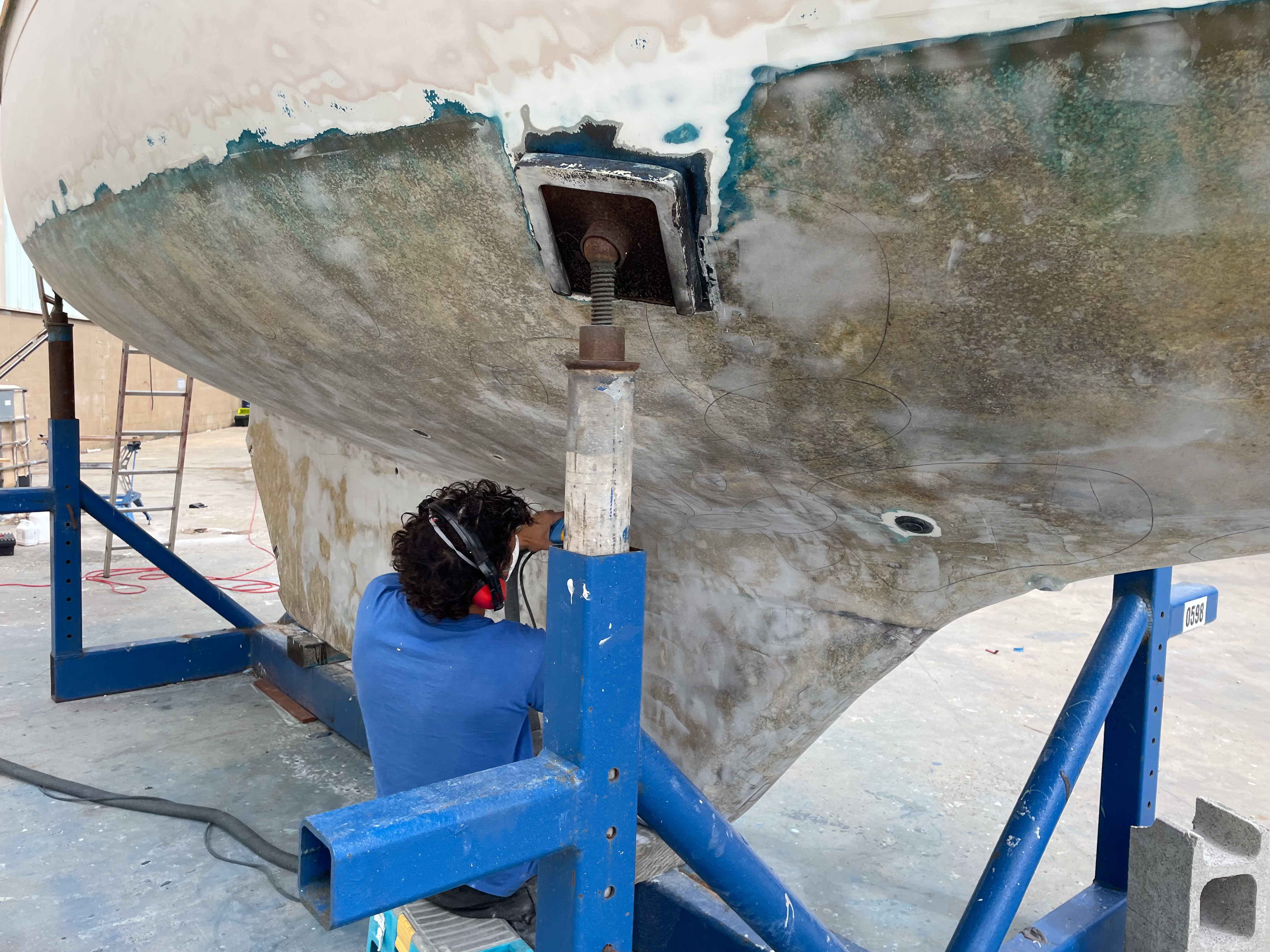
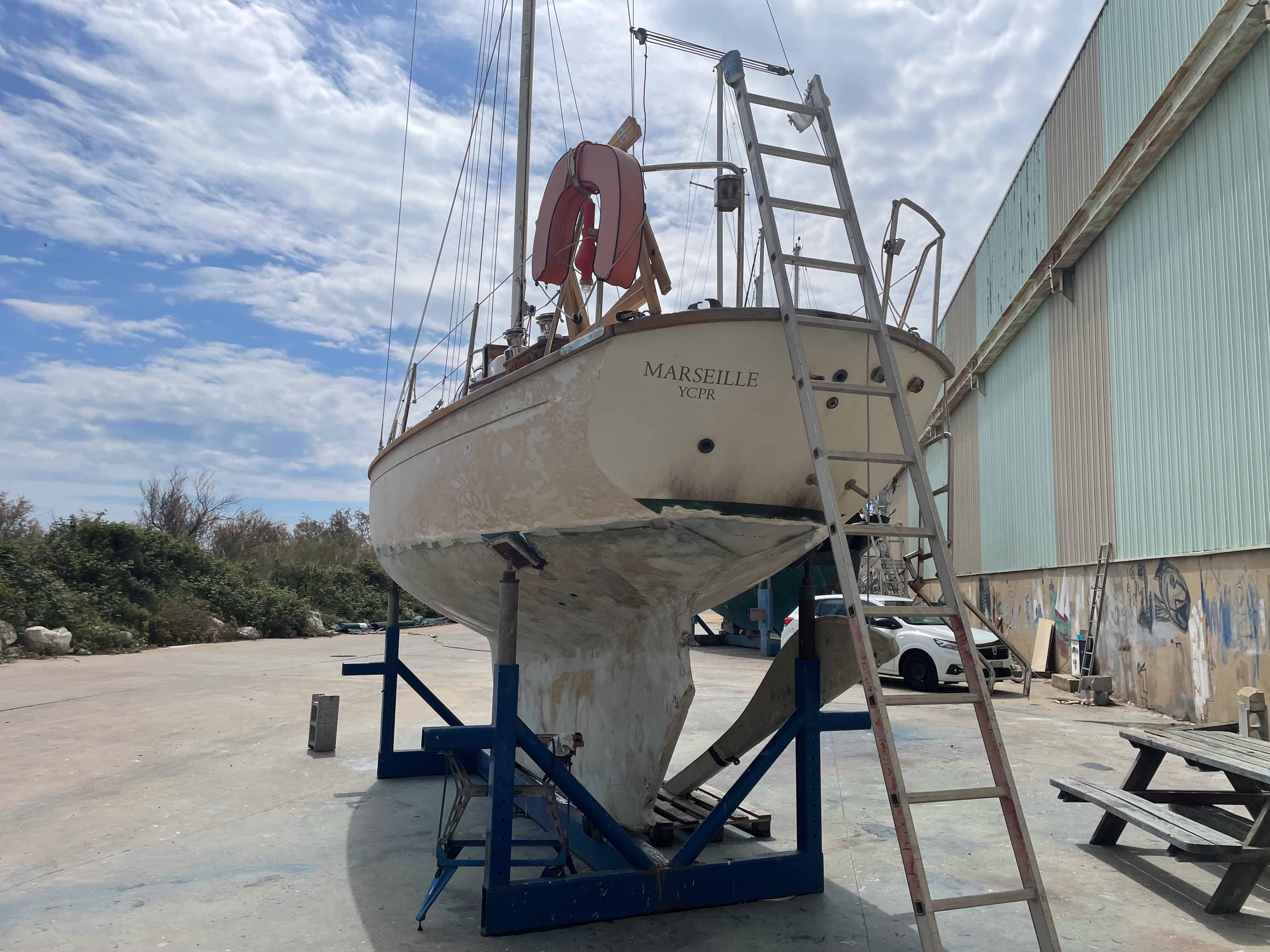
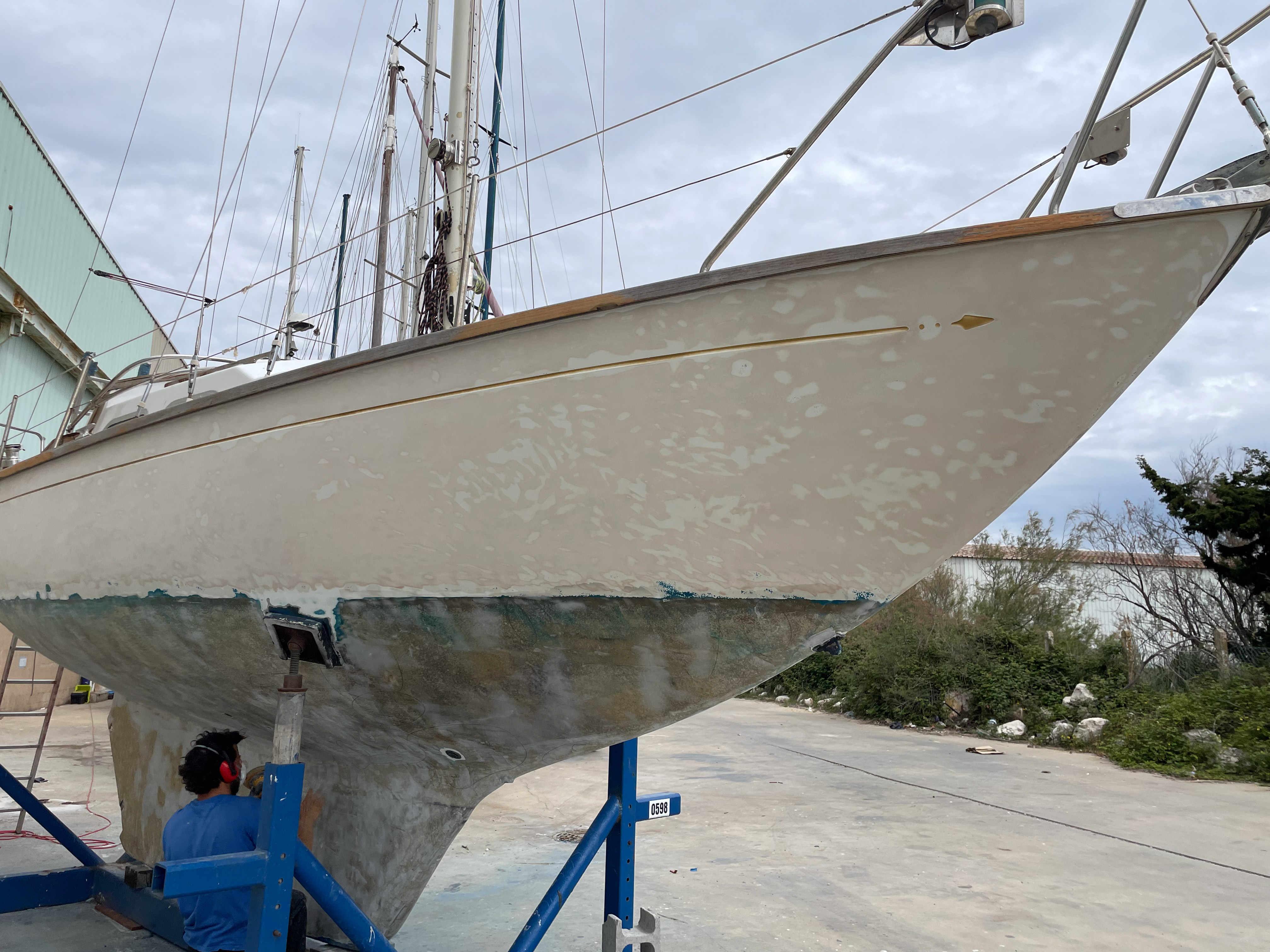
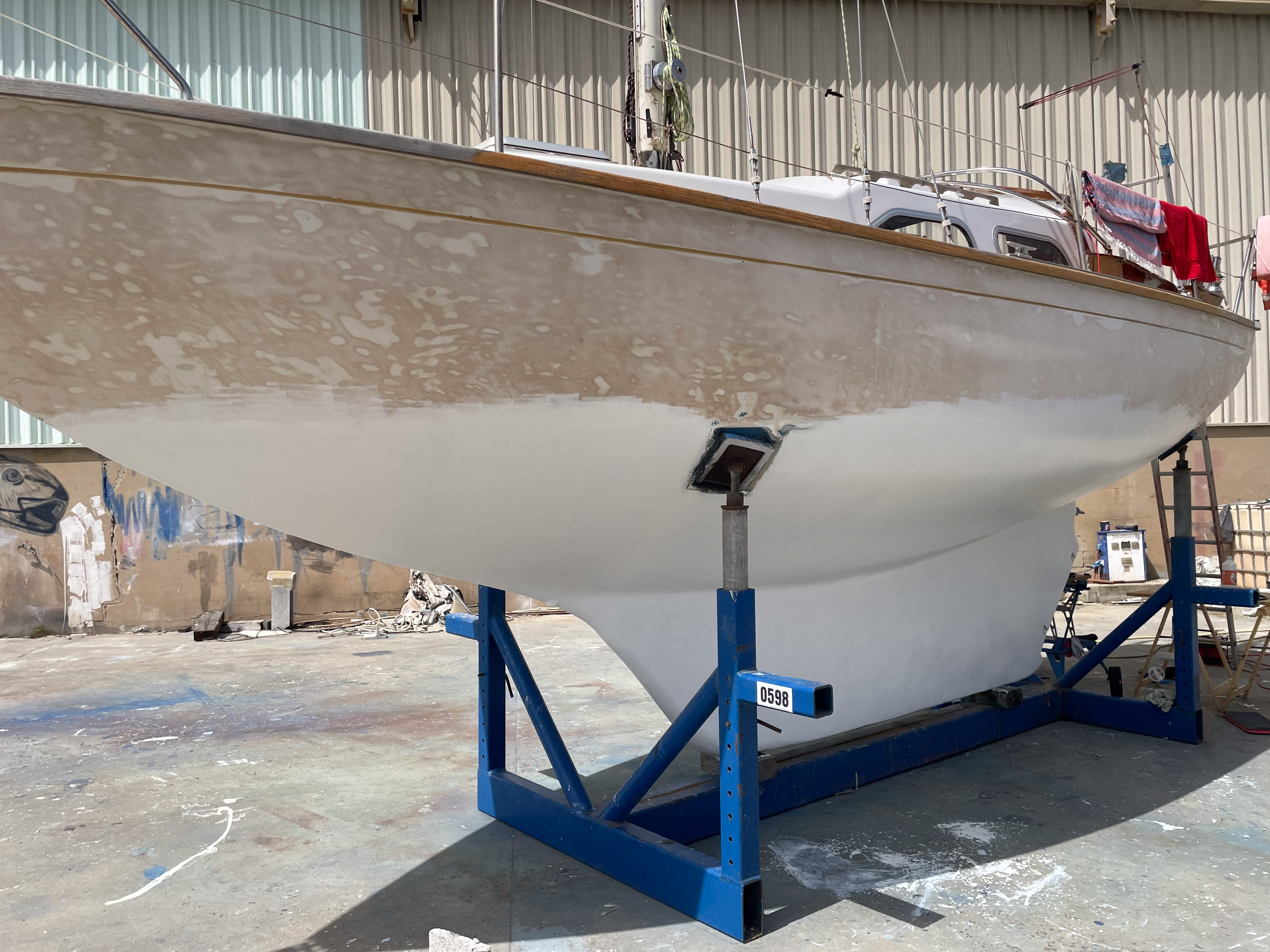
We decided to do all the repairs ourself and hauled the boat out of the water into the spot on the dry dock at Port-Saint-Louis-Du-Rhone - next you’ll find the images of the process
Step 1: Gelcoat Removal & Drying
The goal is to remove the non-waterproof gelcoat and expose the wet laminate underneath.
- Removal
- Blister Treatment: We used the blow torch method to treat the blisters -it is the most extreme of the techniques but after a pretty rough couple of weekends the blisters were succesfully removed
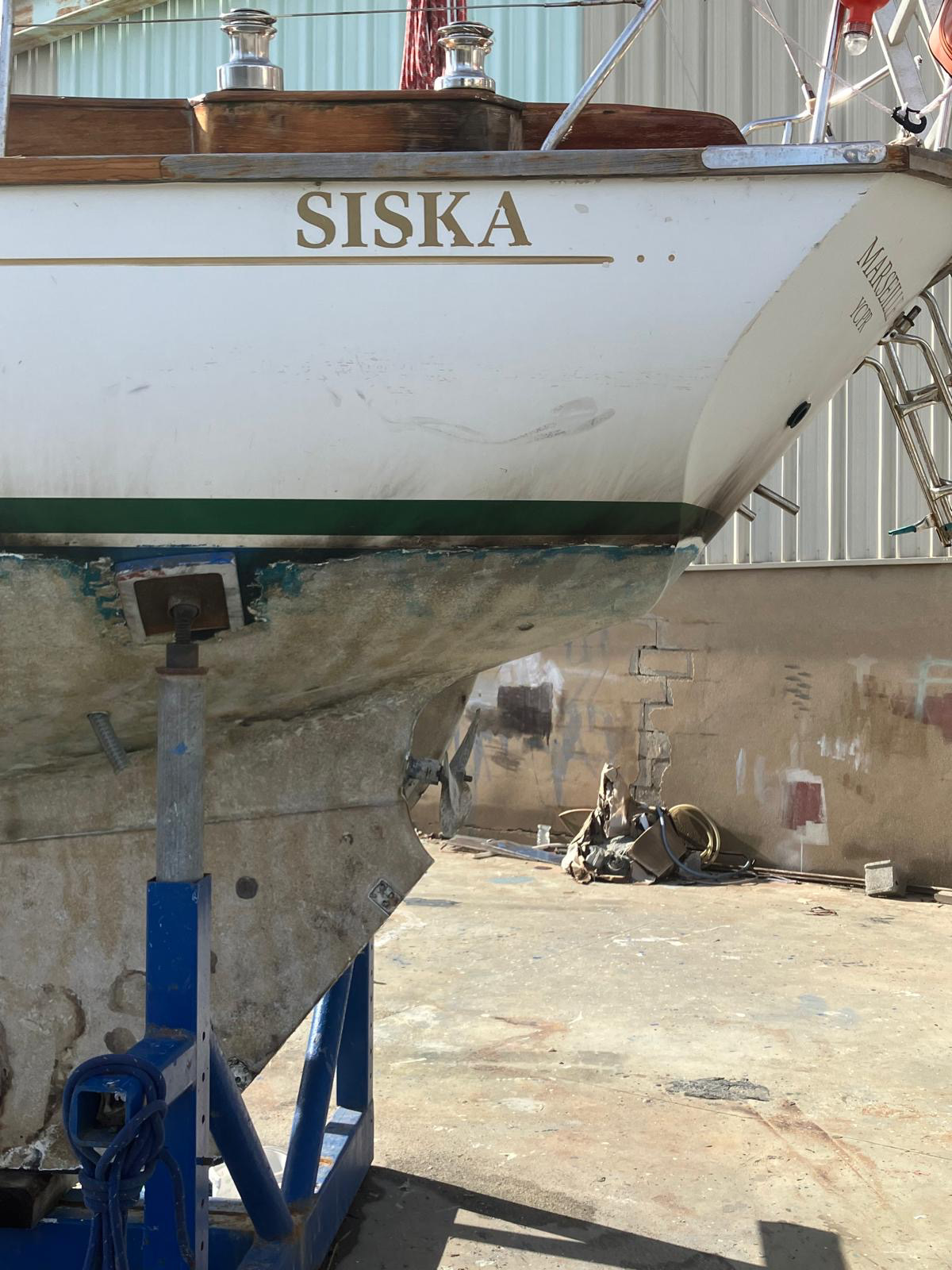

- Washing: The exposed hull was thoroughly hot-washed daily for several days with fresh water to flush out the water-soluble chemical contaminants (the “blister juice”).
- Drying Time: The hull was allowed to dry completely until moisture meter readings returned to a stable low baseline (several weeks).
Step 2: Laminate Repair (Filling & Fairing)
Once the hull fully dried, we needed to make the surface smooth again.
- Applying Epoxy Filler: Using a two-part epoxy filler/fairing compound to fill the scalloped areas and any voids left by the gelcoat removal.
- Sanding & Fairing: Sanding the cured filler smooth to achieve the desired hull shape. The goal is a perfectly fair surface.
Step 3: Fiberglass Reinforcement
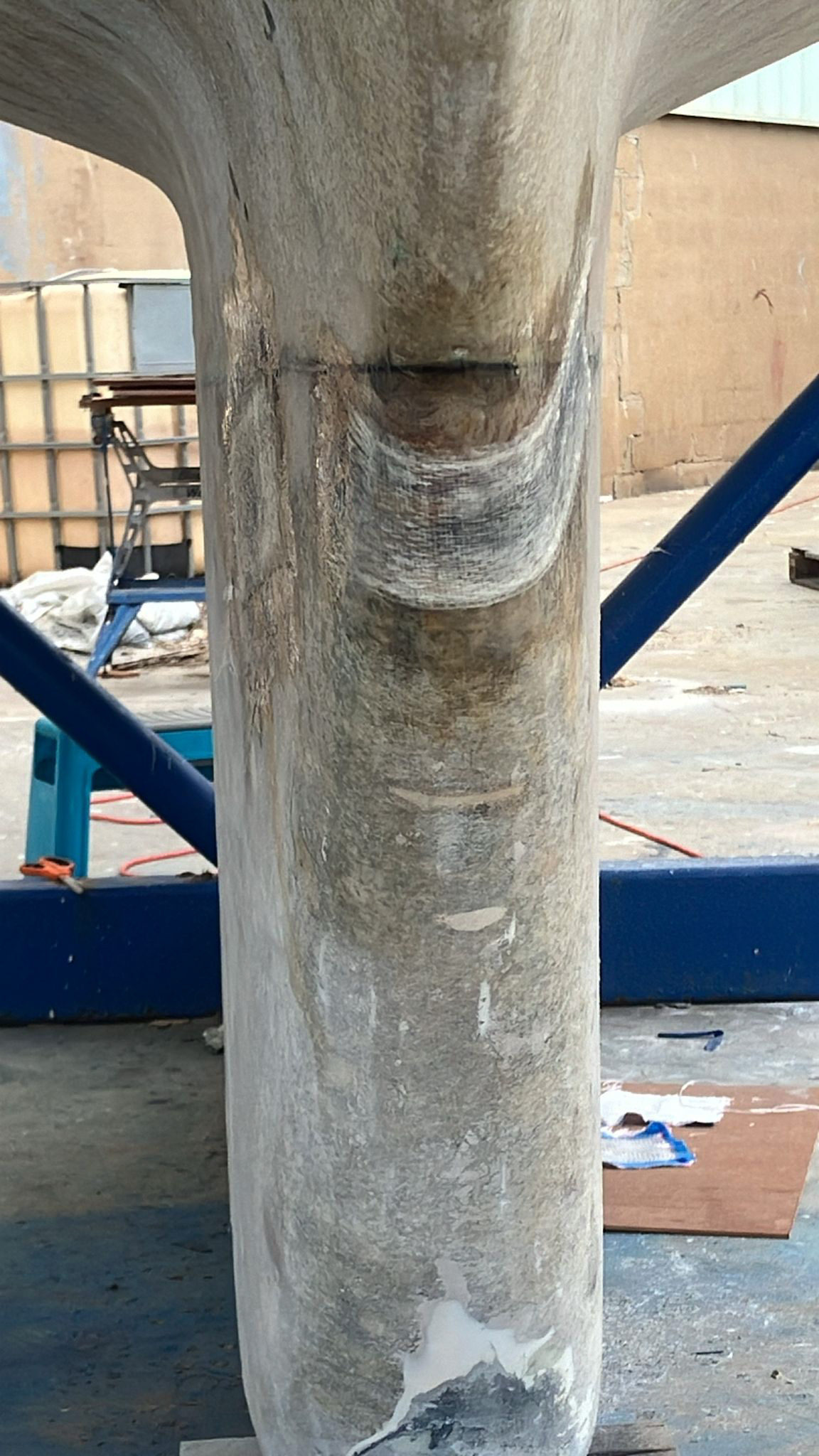
For deep voids or areas of delamination, a structural patch was added.
- Structural Patch: A layer of fiberglass cloth saturated with a solvent-free epoxy resin.
- De-bubble: Using a bubble roller to consolidate the fiberglass and resin, ensuring the cloth was fully saturated and no air trapped.
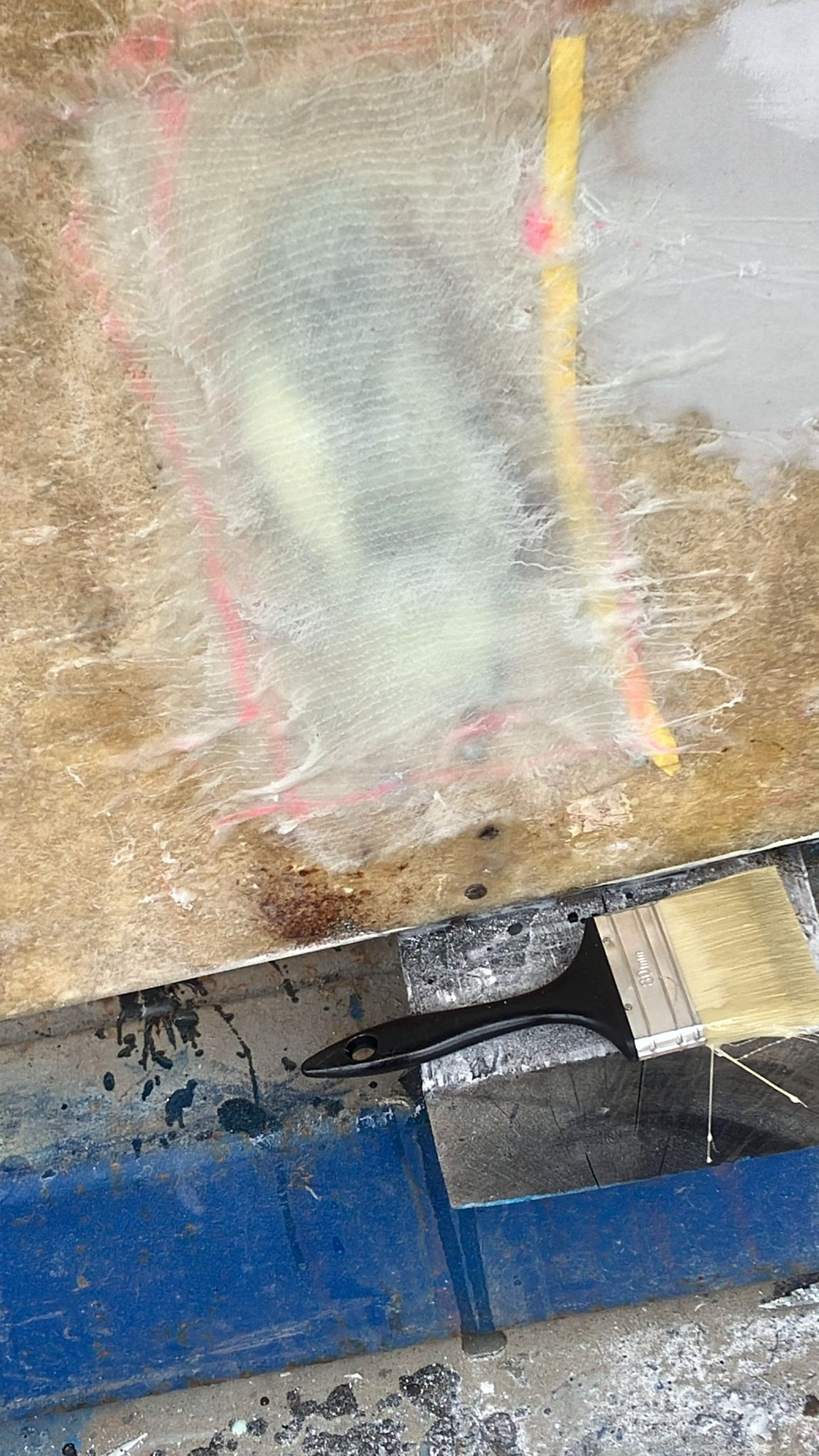
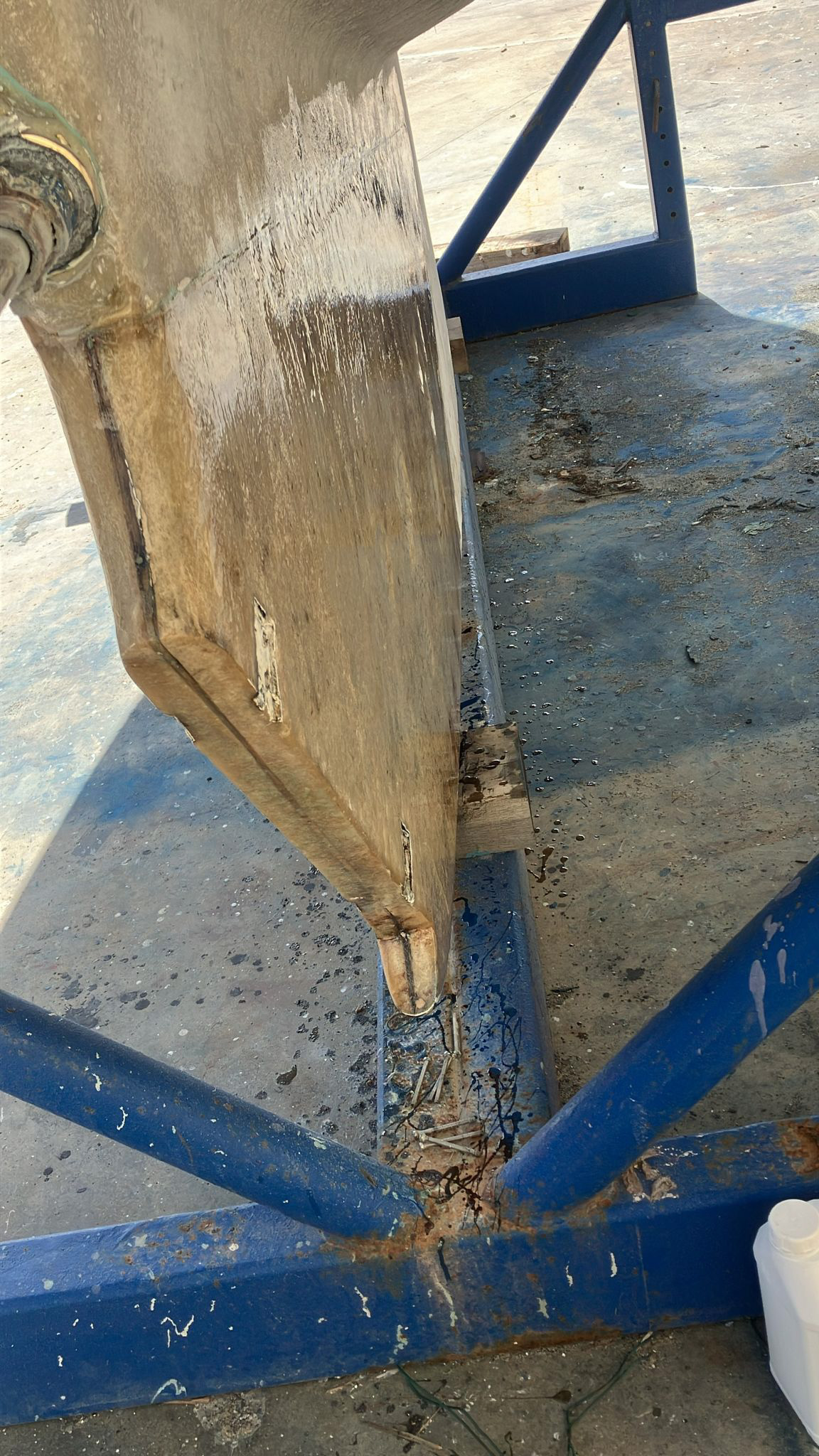







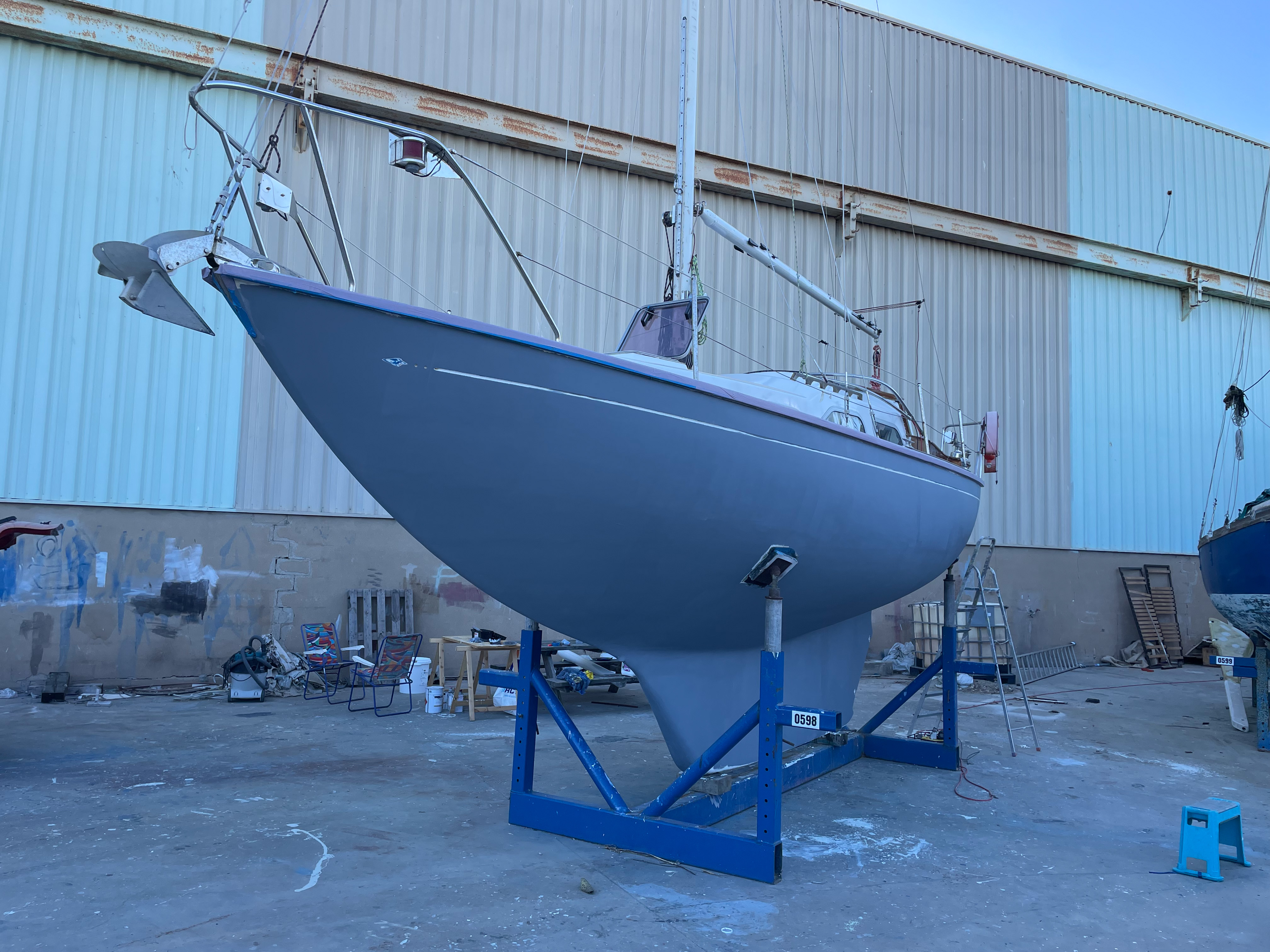
Step 4: Epoxy Barrier Coating
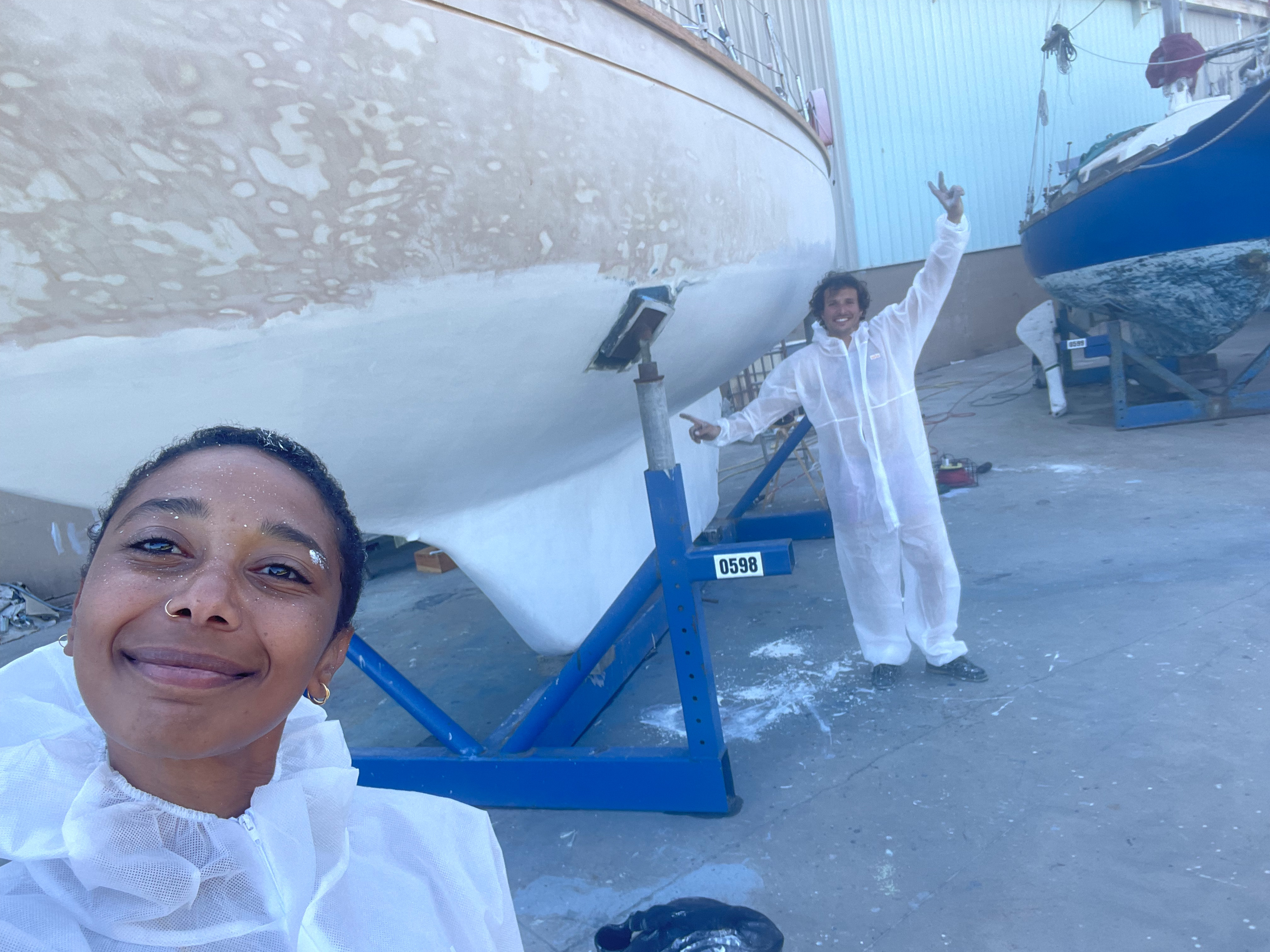
This is the new, impermeable layer that replaces the old gelcoat.
- Application: First coat of a dedicated, moisture-resistant epoxy barrier coat (EPOXYGUARD IM409).
- Layer Count: 4 coats


Step 5: Final Antifouling
The final step is protecting the new barrier coat. We went for coppercoat for environmental reasons and longevity.
- Surface Preparation: Light sanding of the final epoxy coat
- Primer
- Antifouling Application: 4 coats in the August heat!!
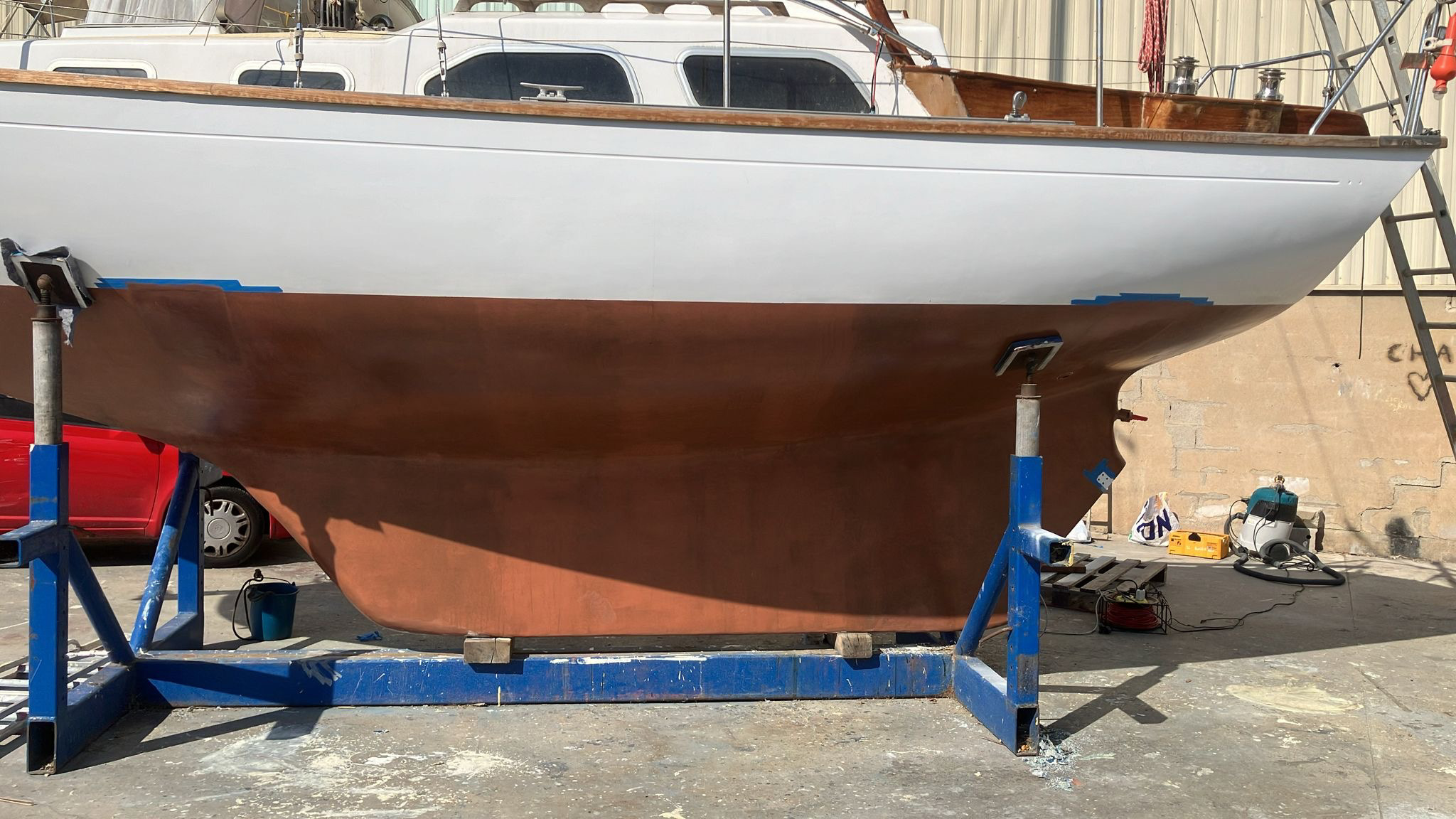


We also sprayed on a new topcoat
Up the mast to adjunt the navigation lights

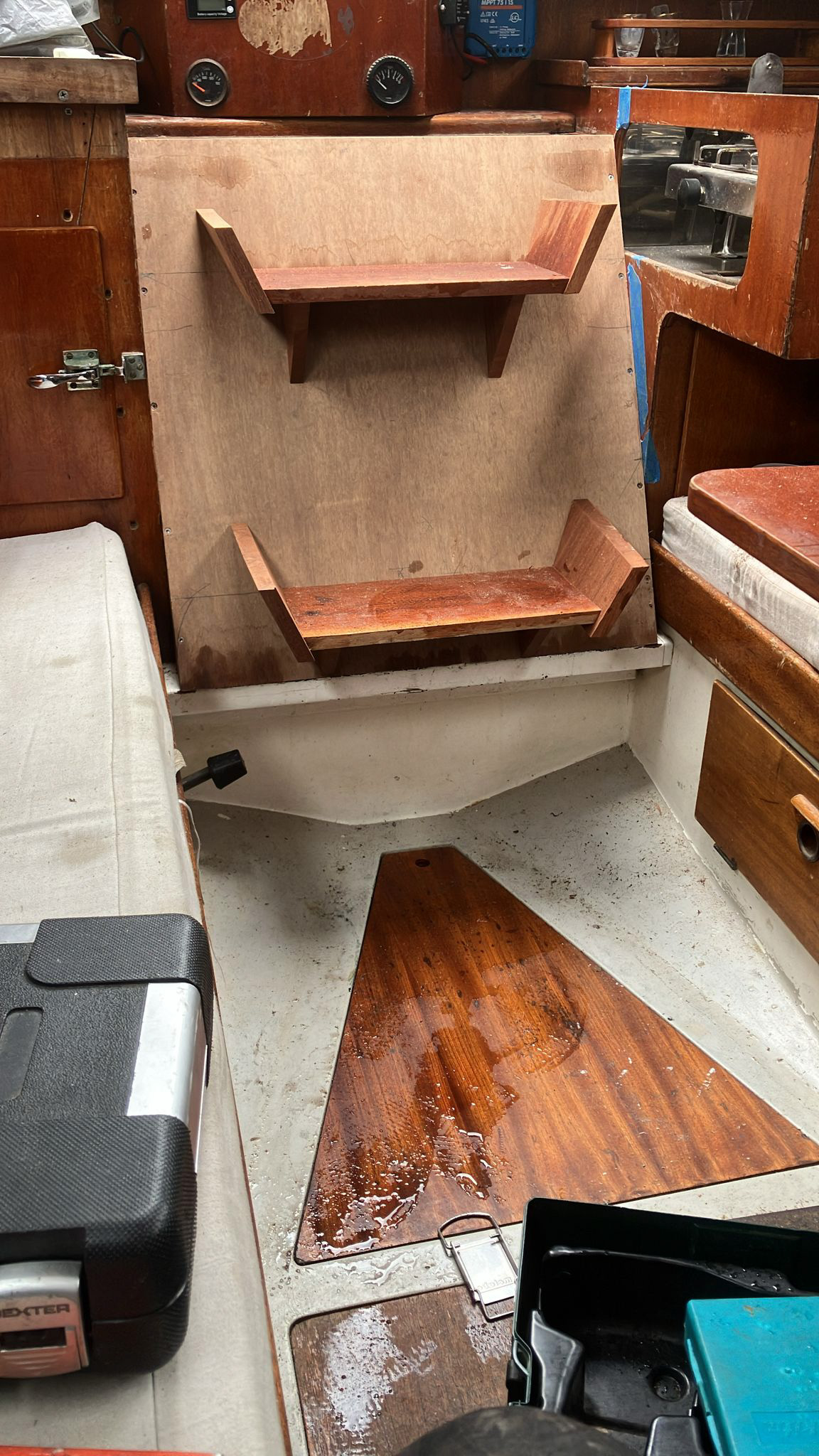
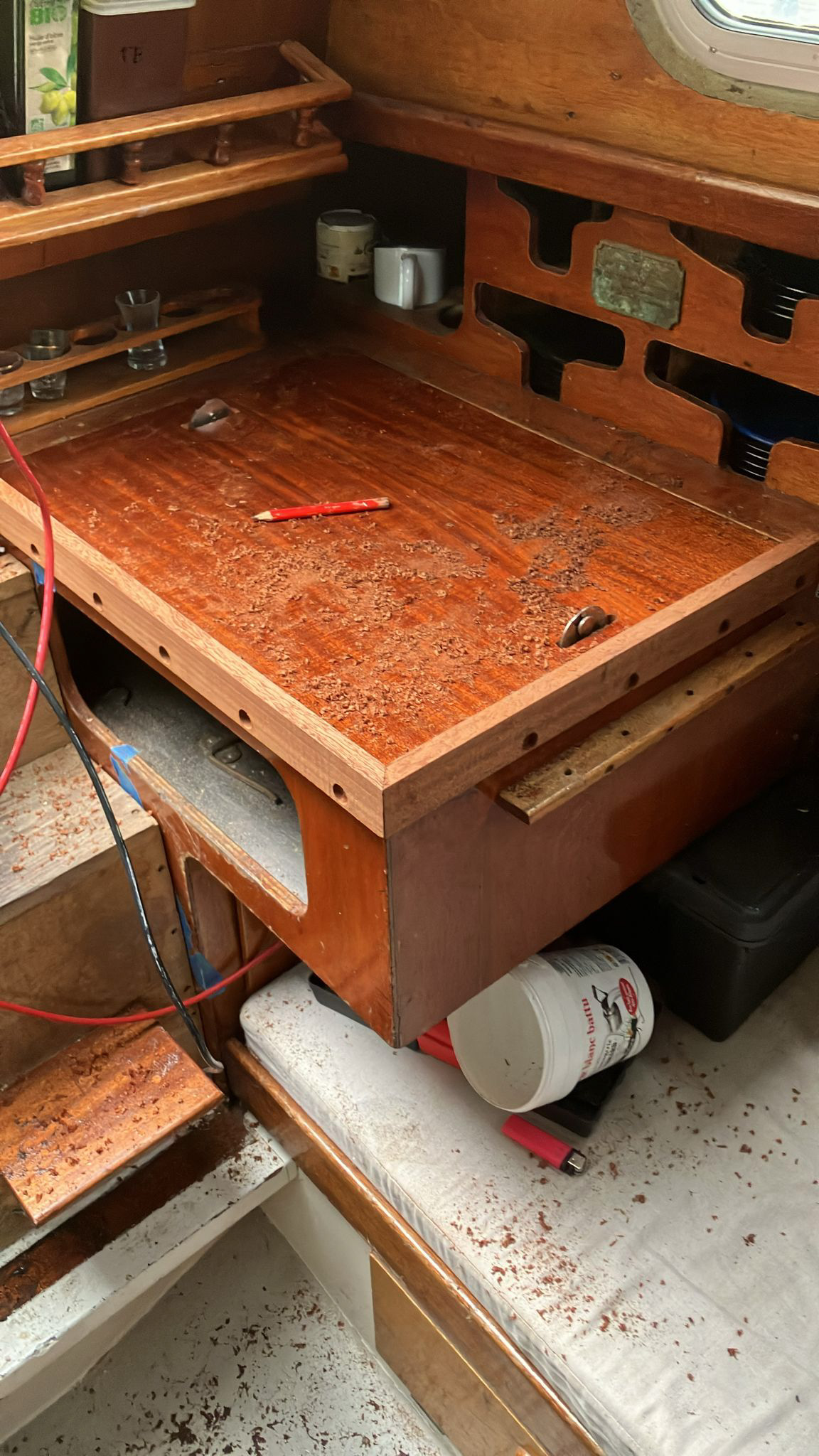
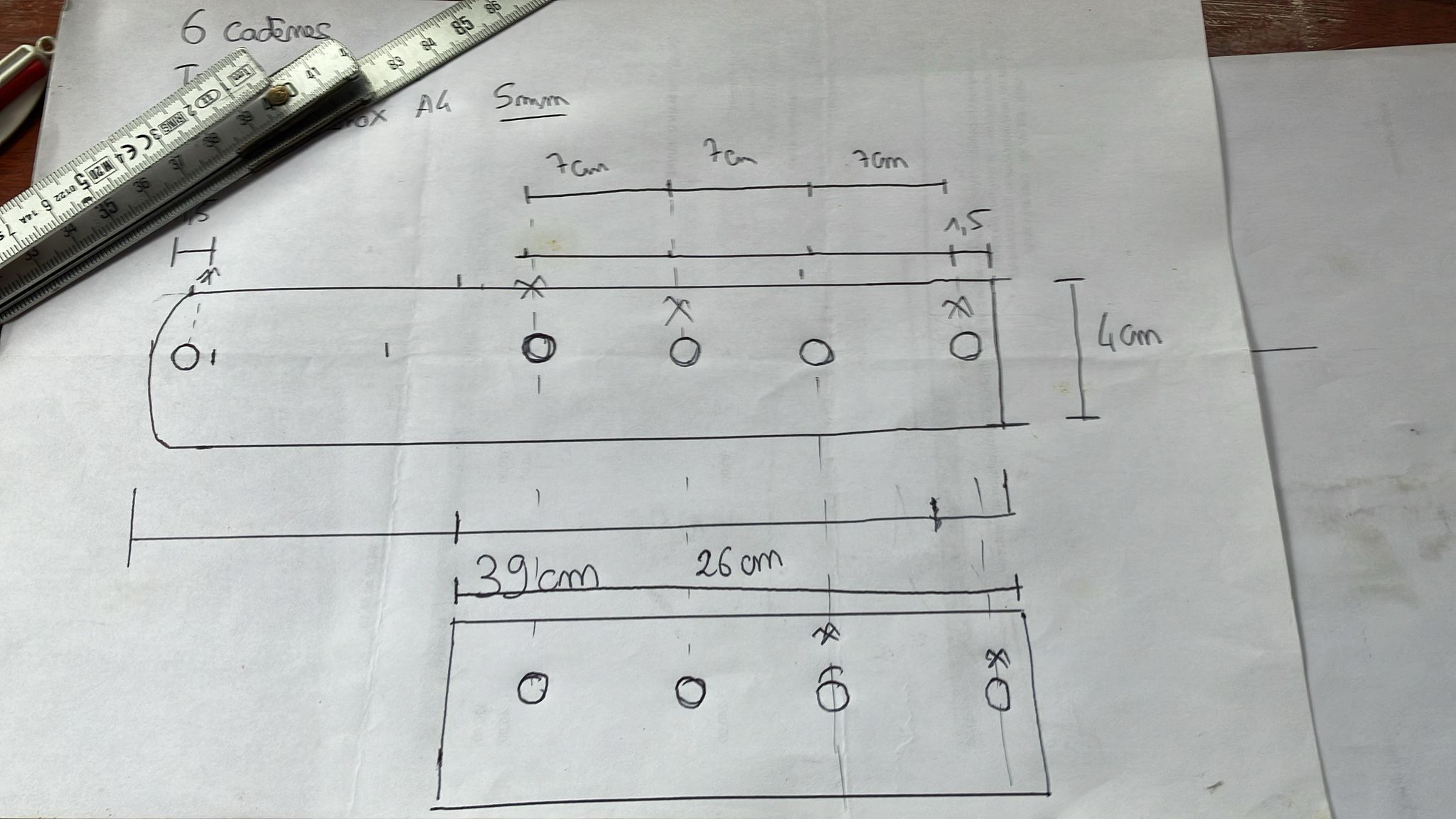
Final touches, engine repairs, propellor repair, work on the interior still ongoing!